ADA Certified Portable Toilets: Federal Accessibility Rules for Rentals
When individuals look for an ada compliant portable commode, they are typically trying to fix a useful issue under time stress. A school is preparing a field day. A city is setting up a weekend festival. A church is holding a fundraiser on open ground with no irreversible toilets close by. A personal location is including temporary centers for a group larger than its building can handle. In each of those circumstances, accessibility is not an optional upgrade or a nice added. It belongs to offering bathroom accessibility in a manner that does not leave impaired visitors, workers, or participants standing outside without any usable option.
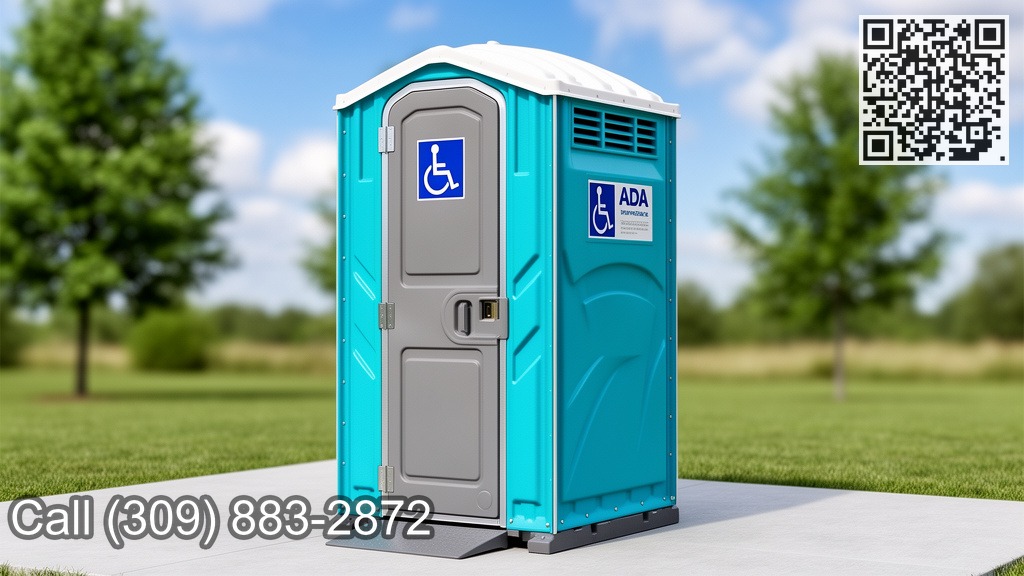
That is where the government regulations matter, and where many rental choices fail. The greatest mistakes are rarely remarkable. Regularly, someone orders a standard financial institution of portable systems, assumes one bigger unit somewhere on site will certainly cover the need, after that positions it on grass, gravel, or a sloped edge that makes it difficult or impossible to make use of. Theoretically, the order may look penalty. In the real world, it falls short the person that needs it.
The managing government standard in the United States is the 2010 ADA Standards for Accessible Design, as analyzed by the united state Gain Access To Board and the Division of Justice. For short-term mobile bathroom arrangements, those standards are not abstract. They form the number of available units are needed, just how they need to be recognized, and whether people can really reach and make use of them.
The regulation that answers the initial inquiry most tenants ask
The initial question is typically simple: how many easily accessible devices do we need?
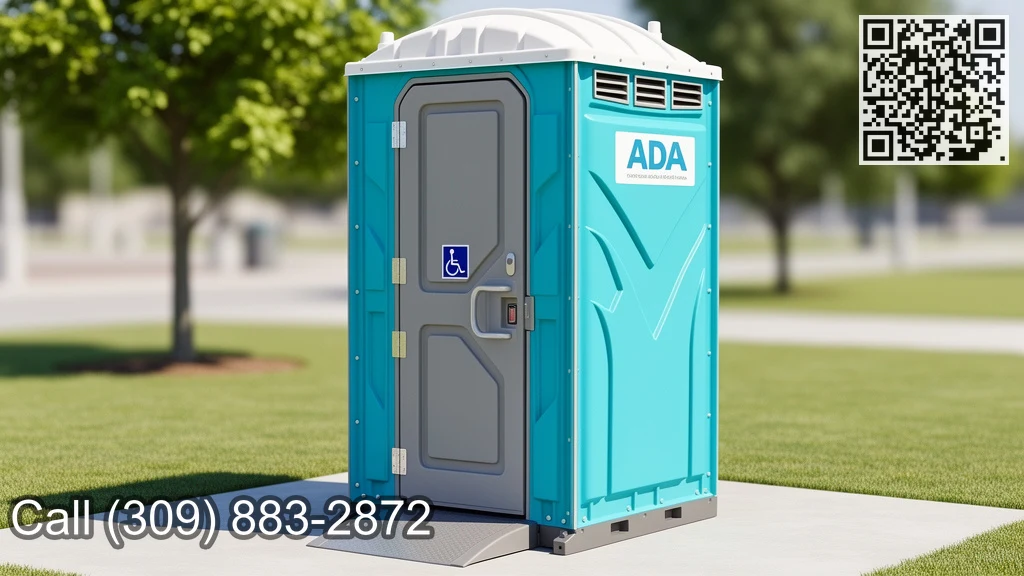
For collections of mobile single-user toilet systems, a minimum of 5 percent of the units in each cluster need to come. The Gain access to Board has made clear that this applies even at temporary occasions. That point issues since lots of people still presume momentary means loosened up. It does not.
If you are leasing a bank of portable toilets for an occasion, the obtainable matter is linked to the collection itself. The regulation is not satisfied by claiming there is an accessible toilet elsewhere on the residential or commercial property if the mobile commode collection individuals are in fact making use of does not include the called for easily accessible unit or units. The cluster is the relevant setup.
In everyday preparation, this is where an ada portable commode rental order requires even more idea than a simple head count. Event coordinators commonly concentrate on complete guests https://judahjmle385.clarionvale.com/posts/ada-mobile-washroom-rental-and-the-international-icon-of-availability and solution periods, which are necessary for hygiene, however government availability policies create a separate requirement. Also if the typical devices appear ample for crowd quantity, the easily accessible unit matter still needs to be addressed.
This is also where terms can muddy the conversation. Suppliers, organizers, and locations might use expressions like ada accessible mobile bathroom, ada portable restroom, ada handicap easily accessible portable toilet, or ada compliant easily accessible mobile washrooms. The tags differ. What matters is whether the device and its positioning actually satisfy the applicable federal access standards.
Bigger is not the same as compliant
A remarkably common misunderstanding is that a larger mobile toilet immediately certifies as easily accessible. In method, dimension alone does not address the question.
The mobile easily accessible systems must fulfill toilet-room technological needs. That includes component clearances, turning room, door steering clearances, and suitable grab-bar and water-closet clearance regulations. Those are practical design requirements, not marketing language. A system can be roomier than a standard mobile toilet and still miss what the standards require.
That distinction issues during ordering. If a vendor supplies what sounds like a larger family, an altering device, or an oversized mobile restroom, the renter needs to not presume it is an ada certified mobile restroom unless the supplier is especially representing it as conference ADA requirements. The exact same goes for laid-back shorthand such as "wheelchair unit" or "accessible style system." Those expressions might be utilized loosely in the area. The federal requirement is not loose.
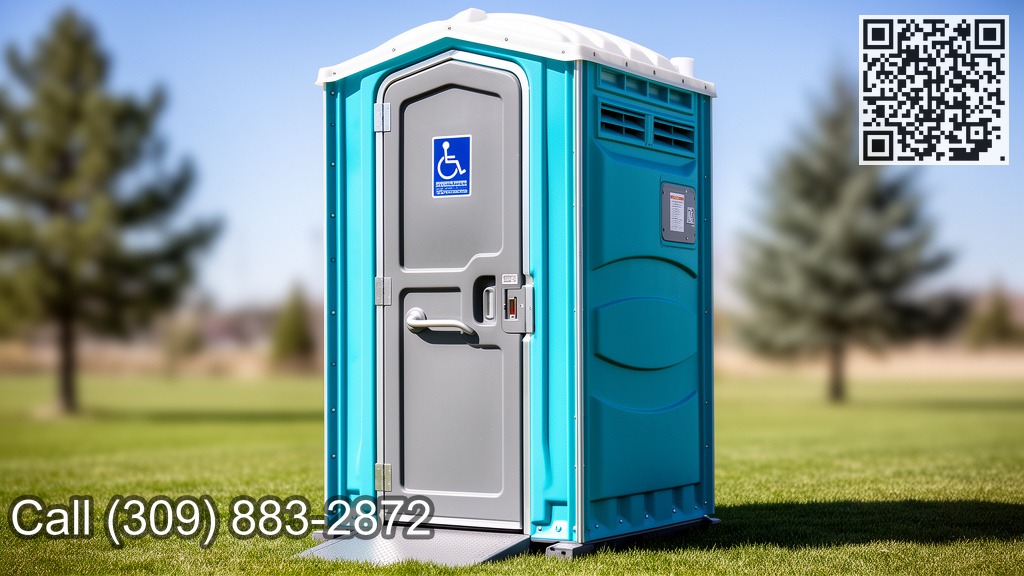
People that have actually never ever had to consider navigating clearances commonly imagine access as a single concern of door width. Actual usage is more challenging. A person might need adequate space to go into, shut the door, turn, position near the commode, and use grab bars safely. If among those steps breaks down, the washroom is not meaningfully accessible.
Placement can make a compliant system unusable
I have actually seen rental setups where the appropriate device was ordered and the wrong ground defeated the entire effort. This is one of the most aggravating failures because it is so avoidable.
Accessible mobile commode units need to have an available route and entrance. If ramps or landings are needed, they should follow the ADA technological requirements. That means conformity does not stop at the unit shell itself. The course to the device matters. The access conditions issue. The surrounding surface area and incline can matter in a very useful way.
An ada-compliant mobile toilet put at the far side of a muddy field may inspect a box in an agreement yet still be pointless to many individuals. The exact same holds true for an unit placed where wheel web traffic penetrates soft ground, where a limit problem is unpleasant, or where the only approach forces a person via a busy solution area. Federal access is not practically the presence of the unit. It is about access to it.
This is one reason seasoned website planners walk the design before shipment, not after. They think of arrival, flow, and what the restroom experience will certainly seem like for a person making use of a wheelchair or various other flexibility aid. They also think about weather condition. A path that seems appropriate on a dry setup day can develop into an issue after rain, particularly on temporary occasion sites.
For occupants, the best practice is to go over placement early, not as a final decline instruction. If there are numerous toilet banks throughout a home, each collection needs to be reviewed, not simply the total order quantity.
Identification becomes part of the guideline, not simply a courtesy
Accessible portable bathroom systems should be identified with the International Symbol of Availability. That requirement may seem minor compared to route and clearance concerns, however it serves a real function.
People should not need to guess which device is the available one. At crowded occasions, complication lose time and creates awkward interactions, specifically when attendants, volunteers, or various other visitors start rerouting somebody based upon assumptions. Clear identification aids customers discover the system meant to fulfill access demands. It likewise assists team screen whether the obtainable bathroom remains open, reachable, and in service.
This factor is easy to neglect when a rental yard sends out combined stock or when occasion branding is layered over the toilet location. Ornamental covers, indicators, fencing, and group control need to not cover the availability sign or make the device tough to recognize. If the unit exists however not plainly marked, the site is creating a trouble it did not require to create.
Temporary occasion does not suggest short-term responsibility
Many organizers assume government availability criteria use most strictly to long-term structures and much less purely to momentary occasion facilities. That assumption results in faster ways, and faster ways often tend to turn up in washrooms first.
The Gain access to Board states the 5 percent accessible-unit policy uses even at short-lived events. That is worth sitting with for a moment. A one-day fair, a three-day concert, a school circus, or a weekend showing off event might be short-term on the schedule, yet the commitment to supply available commode accessibility does not go away just because the frameworks are rented and carried away later.
That is especially vital for public-facing occasions where participation is open and differed. If the only obtainable option is in a far-off structure, secured facility, or separate location not integrated with the event circulation, that often signals poor planning even prior to anybody starts asking legal concerns. Individuals see when the obtainable bathroom is dealt with as an afterthought.
A much more humane technique is additionally the much more functional one. Place the easily accessible unit where a person would reasonably expect it to be, amongst the cluster it offers, on a course they can in fact use, with adequate surrounding space to approach and maneuver. The objective ought to not be a technological near miss. It needs to be dignity without additional hassle.
The construction-site wrinkle individuals misread
There is one location where individuals commonly listen to a partial rule and use it too broadly. The ADA Requirements distinguish portable commode devices at construction websites used specifically by building and construction workers. Those are treated in a different way under the older 1991 basic referenced in the verified context, which excused that category from the portable-toilet access scoping need pointed out there.
What that does not imply is that general mobile bathroom services are in some way generally excluded. They are not. If you are setting up mobile bathrooms for public events, clients, visitors, clients, visitors, or mixed-use website requirements, you need to not rely upon a construction-site exception that was directly mounted and connected to devices utilized exclusively by building personnel.
This is among those information that can create incorrect self-confidence. Someone hears that "building porta potties are exempt," reduces that in memory, after that uses it to any short-term setup on a work-adjacent property or improvement occasion. That is not a risk-free analysis. The context matters.
For most common rental discussions concerning public-facing or event-related use, the accessible-unit demand continues to be the pertinent rule.
What "conformity" looks like throughout a rental conversation
Most renters do not require to remember the government standards. They do require to ask much better inquiries. The top quality of the rental conversation commonly forecasts the high quality of the delivery.
A trusted discussion regarding ada compliant portable bathrooms ought to cover the device itself, the number of available systems in each cluster, just how the unit will be determined, and just how customers will reach it. If the discussion never gets beyond "Do you have a handicap system?" that is normally also shallow.
Words matter here. "Handicap device" is still common in the area, yet a much better and a lot more precise technique is to ask for an ada certified portable toilet or ada-compliant mobile bathrooms that satisfy the suitable government ease of access requirements. Accuracy aids since it forces the vendor and the renter to concentrate on compliance as opposed to harsh group matching.
The website strategy matters equally as much. I have seen skilled occasion managers mark the accessible toilet place prior to they decide where food trucks go. That may sound in reverse to someone concentrated on crowd convenience, yet it shows good judgment. If trucks, secure fencing, generators, or staging later on press the path, the washroom ends up being the casualty. Locking the available path into the very early plan avoids that.
A brief rental list that protects against the most common mistakes
Use this before shipment day, specifically if numerous individuals are taking care of site logistics.
- Confirm that each mobile commode cluster consists of at the very least 5 percent obtainable units.
- Verify that the easily accessible unit is identified with the International Sign of Accessibility.
- Review the route to the unit, not simply the device itself, for functional accessibility.
- Check whether the entry, and any type of needed ramps or landings, will meet ADA technical requirements.
- Ask the supplier to validate the unit is planned to meet ADA toilet-room technical demands, including clearances and steering space.
That is a short list, however it catches numerous avoidable failings. The point is not to transform every tenant into a code specialist. The factor is to keep the order from drifting into assumptions.
Why this problem is obtaining even more interest, not less
Accessibility conformity is being enforced in a broader environment than lots of companies and organizations realize. One relevant indication of that broader environment is the Division of Justice support from April 2026 expanding the due date for state and local government internet and mobile ease of access guidelines to April 26, 2027 for larger entities. That assistance is about electronic access, not portable toilets, yet it shows something important: ADA compliance is energetic, noticeable, and increasing across sectors.
In ordinary terms, companies ought to anticipate ease of access analysis to continue, not discolor. Physical access and digital access are different compliance locations, yet they rest under the same bigger assumption that individuals with handicaps can take part meaningfully and without unnecessary barriers.
For mobile toilet rentals, that means the old practice of dealing with accessibility as a box to check late in the planning cycle is growing riskier and extra out of action with just how responsible operators currently work. It likewise means vendors that understand easily accessible arrangements will attract attention, because they can help customers prevent avoidable errors before a problem, disruption, or negative event experience forces the issue.
Edge cases that are worthy of extra thought
Some rental scenarios are simple. Others are not. Multi-zone events are a fine example. A site might have a number of separate mobile commode clusters spread out throughout a park, fairground, or short-term place footprint. In those situations, it is insufficient to focus just on the total number of available systems throughout the entire property. The cluster-based regulation matters.
That can surprise coordinators who assume one centrally situated ada portable washroom will satisfy the event. If people are using various washroom banks in various locations, each collection needs attention. Otherwise, a visitor might find that the toilet nearest the stage, household area, vendor section, or sports field is hard to reach, while the only available unit is far away.
Another predicament entails shipment surface areas. An arrangement might practically include an available unit, yet the selected place may change late due to weather condition, equipment congestion, or traffic flow. Final actions are common in event operations, and they are where ease of access frequently gets endangered. A device shifted from a hard, secure area to harsh ground can come to be less useful despite the fact that the documents never ever changed.
Then there is the concern of token positioning. Often an accessible portable restroom is placed behind the major collection, next to storage, or in a side lane that feels separate from the event. While the verified federal facts right here do not talk to every layout nuance, anyone with functional experience understands that sidelining the available system often creates both self-respect issues and blood circulation issues. If the system is more challenging to locate, more difficult to reach, or aesthetically dealt with as outside the primary guest experience, customers feel that distinction immediately.
Working well with suppliers and venues
The best rental end results normally originate from 3 events taking access seriously at the very same time: the occupant, the supplier, and the website host. Problem starts when each thinks another person is dealing with it.
Venues occasionally presume the portable washroom business will automatically provide the right ada compliant mobile washrooms and position them properly. Suppliers often think the site coordinator comprehends route and surface problems. Event coordinators often presume the venue has actually currently accepted accessible placement. Those presumptions leave gaps.
A much better functioning rhythm is straightforward. Determine early which washroom clusters are needed, recognize where the obtainable units will go within those collections, and verify that the path and entry will certainly work under real event conditions. If there is any uncertainty, stroll the site. The stroll frequently discloses problems the site map hid.
This is likewise the minute to ask straight concerns without humiliation. Can the device be placed on an extra secure path? Will crowd-control obstacles obstruct the approach? Is there enough room around the door location for maneuvering? If rainfall changes the ground conditions, is there a backup location? Those are not picky information. They are the distinction between conformity language and functional usability.
The human side of obtaining it right
A portable bathroom is not glamorous infrastructure. That is specifically why inadequate choices take place around it. People put their interest on phases, wedding catering, signage, auto parking, or ticketing, after that rush bathroom placement at the end. Yet for a visitor who can not utilize the offered restroom, the event experience narrows quickly. It ends up being difficult, awkward, and occasionally physically risky.
Getting an ada-compliant portable bathroom configuration right communicates something larger than lawful recognition. It claims the coordinator anticipated handicapped people to be present and prepared for them as component of the crowd, not as a special exemption. That is a little operational option with a huge social meaning.
It likewise often tends to boost the website for every person involved. Clear routes decrease complication. Better placement aids assistants and custodial groups. Proper identification cuts down on misdirection. Thoughtful spacing makes traffic circulation smoother around the toilet financial institution. Accessibility preparation seldom assists only one group.
If you are renting mobile systems and trying to figure out the government standard, maintain the focus on what the rules actually call for. For collections of single-user mobile toilets, at the very least 5 percent has to be accessible, also at temporary events. The easily accessible device needs to be identified with the International Sign of Ease Of Access. It must be reachable by an available path, and if ramps or landings are needed, they have to satisfy ADA technical requirements. The device itself need to fulfill relevant toilet-room technological needs, consisting of clearances and maneuvering space.
That is the core. Everything else is execution. And in portable toilet leasings, execution is where compliance either materializes or silently drops apart.
 Ask ChatGPT
 Ask Grok
 Ask Perplexity
 Ask Claude
 Ask Google AI
 Ask You